How to Keep Your Senior Dog’s Mind Sharp: Proven Tips for Mental Health and Cognitive Wellness

As dogs age, keeping their minds active becomes just as important as maintaining their physical health. Senior dogs can experience cognitive decline, memory loss, confusion, and reduced mental alertness, similar to aging humans. Fortunately, there are many ways pet owners can help keep their senior dog’s brain healthy and engaged.
In this guide, you’ll discover practical and effective strategies to keep your senior dog’s mind sharp, improve their quality of life, and strengthen your bond during their golden years.
Understanding Cognitive Aging in Senior Dogs
A dog’s brain naturally changes with age. While some slowing down is normal, significant cognitive decline can affect daily life and happiness.
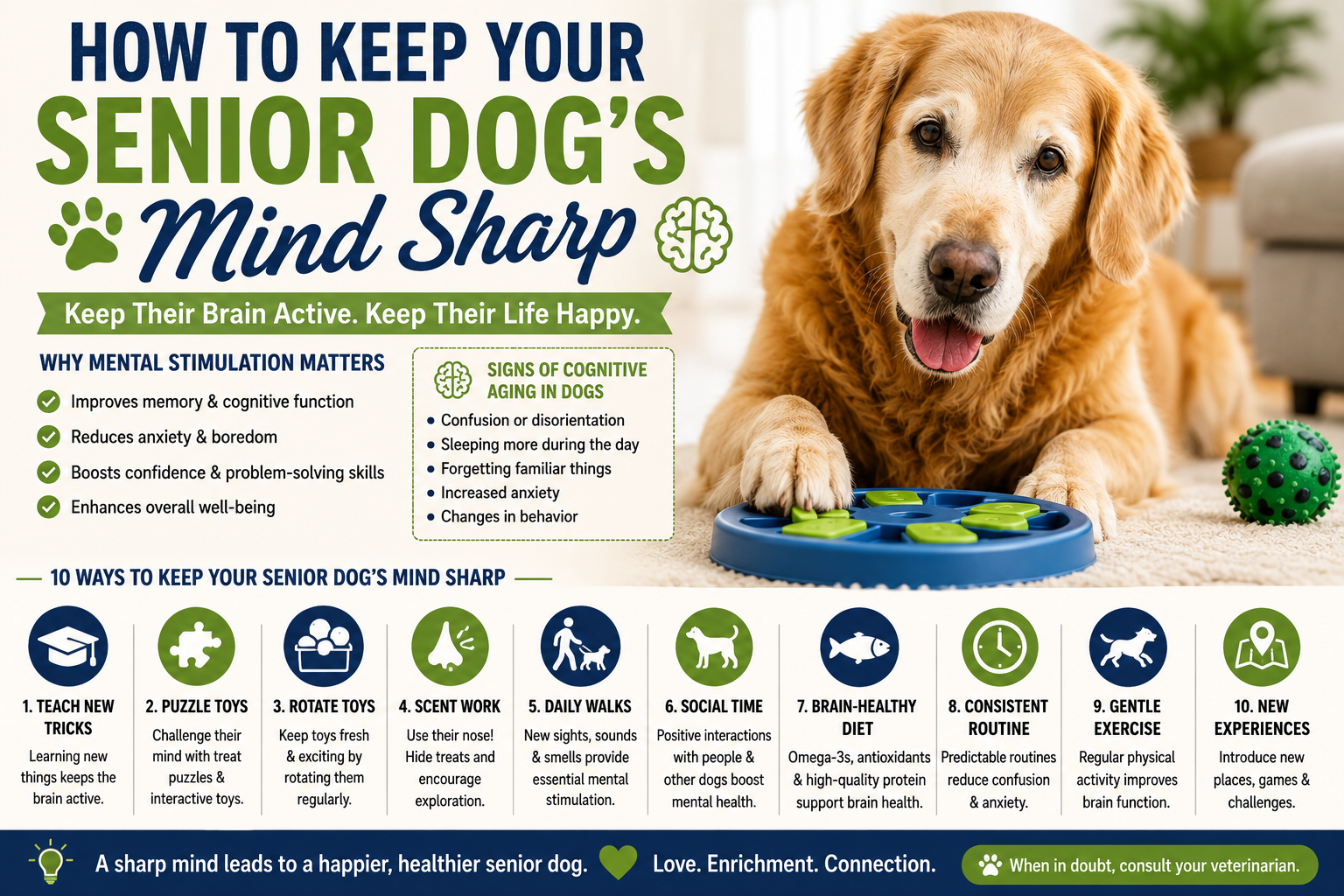
Common signs of cognitive aging include:
- Confusion or disorientation
- Sleeping more during the day
- Difficulty recognizing familiar people
- Increased anxiety
- Forgetting previously learned commands
- Changes in interaction with family members
- Staring at walls or corners
- Altered sleep patterns
Recognizing these signs early allows owners to take steps to support their dog’s brain health.
Why Mental Stimulation Matters for Senior Dogs
Mental exercise helps maintain cognitive function and may slow age-related decline. Keeping your senior dog’s brain active can:
- Improve memory
- Reduce boredom
- Lower anxiety levels
- Increase confidence
- Enhance problem-solving skills
- Strengthen the human-animal bond
- Support overall well-being
Just like physical exercise benefits muscles, mental exercise benefits the brain.
1. Teach New Tricks and Commands
Many people assume older dogs cannot learn new things, but that’s simply not true. Senior dogs can continue learning throughout their lives.
Try teaching:
- New obedience commands
- Simple tricks
- Name recognition of toys
- Target training
- Hand signals
Short training sessions of 5 to 10 minutes are often ideal for senior dogs.
2. Use Interactive Puzzle Toys
Puzzle toys challenge your dog’s brain and encourage problem-solving.
Popular options include:
- Treat-dispensing toys
- Food puzzles
- Snuffle mats
- Interactive feeders
- Hide-and-seek toys
These activities engage your dog’s mind while providing rewarding stimulation.
Recommended Puzzle Toy for Senior Dogs
The Outward Hound Nina Ottosson Dog Brick Interactive Puzzle Toy is a popular choice for mental enrichment and problem-solving practice.
3. Rotate Toys Regularly
Leaving the same toys available every day can reduce excitement.
To maintain interest:
- Store some toys away
- Rotate toys weekly
- Introduce new textures and sounds
- Use scent-based toys
Novel experiences help stimulate brain activity and curiosity.
4. Encourage Scent Work Activities
A dog’s sense of smell remains powerful throughout life.
Easy scent games include:
- Hiding treats around the house
- Creating treasure hunts
- Using scent-detection toys
- Playing “find it” games
Scent work provides excellent mental enrichment and can be adapted to dogs with limited mobility.
5. Maintain Daily Walks and Exploration
Walks provide much more than physical exercise.
During walks, dogs experience:
- New smells
- Different environments
- Social interactions
- Mental stimulation
Allowing your dog time to sniff and explore can significantly enhance cognitive engagement.
6. Offer Social Interaction
Socialization remains important for senior dogs.
Safe social activities may include:
- Visits with friendly dogs
- Family gatherings
- Meeting new people
- Trips to pet-friendly locations
Positive social experiences help keep the brain active and engaged.
7. Feed a Brain-Healthy Diet
Nutrition plays a major role in cognitive health.
Look for foods rich in:
- Omega-3 fatty acids
- Antioxidants
- Vitamin E
- Vitamin C
- DHA
- High-quality protein
These nutrients may help support brain function and reduce oxidative stress associated with aging.
Recommended Omega-3 Supplement
Many veterinarians recommend omega-3 fatty acids to support cognitive function and overall wellness in senior dogs. One highly rated option is Zesty Paws Wild Alaskan Salmon Oil Formula for Dogs.
8. Establish a Consistent Routine
Senior dogs thrive on predictability.
Maintain consistency with:
- Feeding times
- Walk schedules
- Bedtime routines
- Training sessions
A structured environment can reduce confusion and anxiety in aging dogs.
9. Provide Gentle Physical Exercise
Physical activity increases blood flow to the brain and supports cognitive function.
Suitable exercises include:
- Leisurely walks
- Swimming
- Gentle play sessions
- Low-impact activities
Always adjust exercise intensity according to your dog’s age and health condition.
10. Create New Experiences
Novel experiences help stimulate neural pathways.
Examples include:
- Visiting a new park
- Exploring a different walking route
- Introducing new toys
- Learning new games
- Safe travel experiences
Small changes can create valuable mental challenges.
Supplements That May Support Brain Health
Some veterinarians recommend supplements that support cognitive function.
Common options include:
- Fish oil
- DHA supplements
- Antioxidant blends
- Medium-chain triglycerides (MCTs)
- Cognitive support formulas
Always consult your veterinarian before adding supplements to your dog’s diet.
Signs Your Senior Dog May Need Veterinary Attention
While some cognitive changes are normal, consult your veterinarian if you notice:
- Severe confusion
- Sudden behavioral changes
- Excessive anxiety
- Loss of house training
- Significant memory problems
- Changes in appetite or activity
Early intervention can improve outcomes and quality of life.
Frequently Asked Questions
Can older dogs still learn new tricks?
Yes. Senior dogs remain capable of learning throughout their lives. Training can provide valuable mental stimulation and strengthen your relationship.
What are the first signs of canine cognitive decline?
Common early signs include confusion, altered sleep patterns, anxiety, and forgetting familiar routines.
How often should I provide mental stimulation?
Daily mental enrichment is ideal. Even 10-15 minutes of brain games, training, or scent work can make a significant difference.
Final Thoughts
Keeping your senior dog’s mind sharp requires a combination of mental stimulation, physical activity, social interaction, and proper nutrition. By incorporating brain-boosting activities into your dog’s daily routine, you can help maintain cognitive health, improve emotional well-being, and support a happier, more fulfilling life during their senior years.
Aging is inevitable, but with thoughtful care and enrichment, your beloved companion can continue to enjoy an active and engaged life for many years to come.
Disclosure: As an Amazon Associate, I earn from qualifying purchases. This comes at no additional cost to you and helps support our content.