
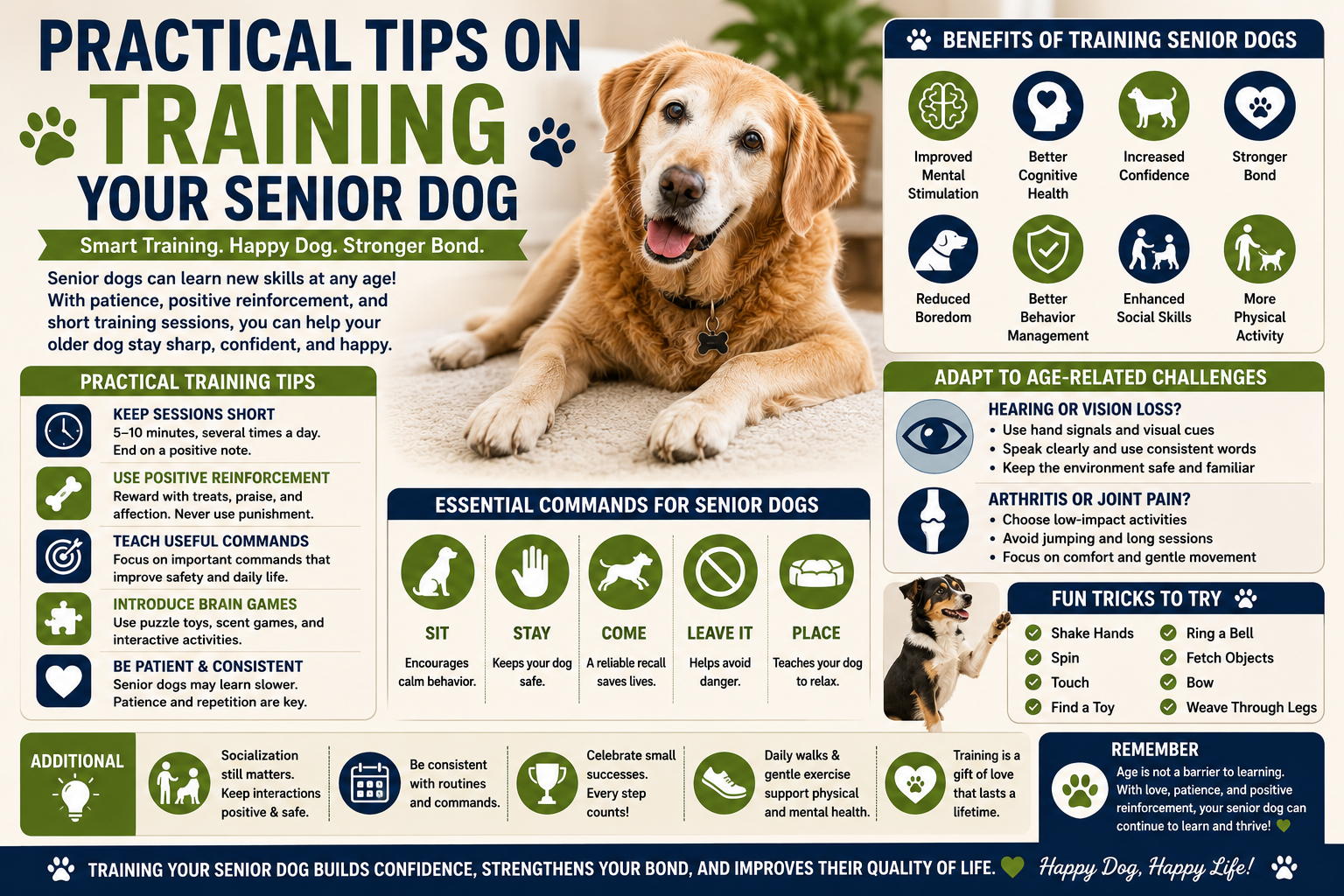
Many dog owners mistakenly believe that training is only for puppies. The truth is that senior dogs can continue learning new skills, commands, and behaviors throughout their lives. In fact, regular training sessions provide valuable mental stimulation, strengthen the bond between you and your dog, and help keep aging minds sharp.
Whether you’ve recently adopted an older dog or want to teach your longtime companion new behaviors, these practical training tips can help your senior dog stay engaged, confident, and happy.
Can You Train a Senior Dog?
Absolutely! The old saying “You can’t teach an old dog new tricks” is a myth.
Senior dogs are fully capable of learning:
- New commands
- Household rules
- Good manners
- Fun tricks
- Brain games
- Agility exercises adapted for older dogs
While older dogs may learn at a different pace than puppies, patience and consistency can lead to excellent results.
Benefits of Training Senior Dogs
Training offers many advantages beyond obedience.
Benefits include:
- Improved mental stimulation
- Better cognitive health
- Increased confidence
- Stronger owner-dog bond
- Reduced boredom
- Enhanced social skills
- Better behavior management
- Increased physical activity
Regular training can even help slow age-related cognitive decline.
Understand Your Senior Dog’s Physical Limitations
Before beginning any training program, consider your dog’s age-related challenges.
Common issues include:
- Arthritis
- Hearing loss
- Vision changes
- Reduced stamina
- Joint stiffness
- Slower movement
Adapt training sessions to your dog’s comfort level and abilities.
Keep Training Sessions Short
Senior dogs often have shorter attention spans and lower energy levels.
Aim for:
- 5 to 10-minute sessions
- Multiple short sessions daily
- Positive experiences
- Plenty of breaks
Short sessions help prevent fatigue while maximizing learning.
Use Positive Reinforcement
Positive reinforcement remains the most effective training method for dogs of any age.
Reward desired behaviors with:
- Healthy treats
- Praise
- Gentle petting
- Favorite toys
Recommended Training Treats for Senior Dogs
One excellent option is Blue Buffalo Bits Soft-Moist Training Dog Treats, which are small, easy to chew, and ideal for older dogs during training sessions.
Avoid punishment-based training, which can create fear and confusion.
Teach Useful Commands
Focus on commands that improve safety and daily life.
Important commands include:
Sit
A basic command that encourages calm behavior.
Stay
Helps keep your dog safe in potentially dangerous situations.
Come
A reliable recall command is essential for every dog.
Leave It
Prevents your dog from picking up harmful objects.
Place
Teaches your dog to relax in a designated area.
These commands can make everyday life easier and safer.
Introduce Brain Games
Mental exercise is especially important for senior dogs.
Try:
- Puzzle toys
- Treat-dispensing toys
- Hide-and-seek games
- Scent work activities
- Interactive feeders
Recommended Puzzle Toy
The Outward Hound Nina Ottosson Dog Brick Interactive Puzzle Toy is a popular choice for providing mental stimulation and encouraging problem-solving skills in senior dogs.
Brain games help maintain cognitive function while providing entertainment.
Be Patient with Hearing or Vision Loss
Many senior dogs experience sensory changes.
If your dog has hearing loss:
- Use hand signals
- Maintain eye contact
- Use vibration cues
If your dog has vision loss:
- Use verbal cues consistently
- Keep furniture arrangements stable
- Guide gently during training
Adjusting your communication style can improve learning success.
Keep Training Fun
Training should never feel like a chore.
Ways to make training enjoyable:
- End sessions on a positive note
- Celebrate small successes
- Use favorite rewards
- Vary activities regularly
Enjoyable training encourages enthusiasm and participation.
Socialization Still Matters
Older dogs benefit from continued social interaction.
Safe social experiences may include:
- Meeting friendly dogs
- Visiting pet-friendly parks
- Family gatherings
- Neighborhood walks
Positive socialization helps maintain confidence and emotional well-being.
Teach New Tricks
Learning new tricks stimulates the brain and boosts confidence.
Fun tricks include:
- Shake hands
- Spin
- Touch
- Find a toy
- Ring a bell
- Fetch specific objects
Mental challenges keep senior dogs engaged and active.
Adapt Training for Arthritic Dogs
If your senior dog has arthritis, choose low-impact activities.
Avoid:
- Repetitive jumping
- Sudden turns
- Long training sessions
Instead, focus on:
- Gentle walking exercises
- Nose work
- Target training
- Simple obedience practice
Comfort should always come first.
Common Training Mistakes to Avoid
Many owners unintentionally make training harder for older dogs.
Avoid:
- Long sessions
- Inconsistent commands
- Harsh corrections
- Unrealistic expectations
- Ignoring physical limitations
Patience and consistency are key to success.
Signs Your Senior Dog Enjoys Training
Look for positive indicators such as:
- Tail wagging
- Excitement when training begins
- Willing participation
- Increased confidence
- Faster response to commands
These signs show your dog is benefiting from the experience.
Frequently Asked Questions
How long does it take to train a senior dog?
Every dog learns differently. Some commands may be learned in a few days, while others require several weeks of consistent practice.
Are treats necessary for training?
Treats are highly effective, but praise, affection, and toys can also be valuable rewards.
Can senior dogs learn complex tricks?
Yes. Many senior dogs can learn advanced behaviors when training is adapted to their abilities.
Final Thoughts
Training your senior dog is one of the best ways to support their mental health, confidence, and overall quality of life. By using positive reinforcement, keeping sessions short, and adapting exercises to your dog’s physical abilities, you can help them continue learning and thriving throughout their golden years.
Remember, age is not a barrier to learning. With patience, consistency, and encouragement, your senior dog can enjoy new experiences, develop useful skills, and strengthen the bond you share every day.